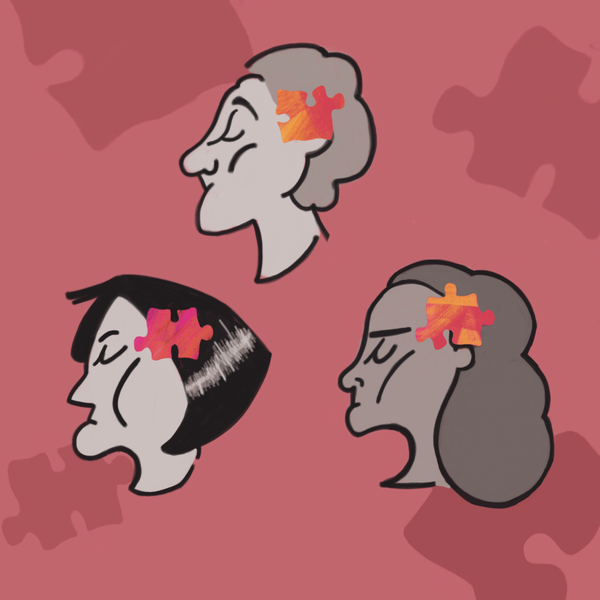
Issue 16 Changing Focus: ADHD in Women Picture a twelve-year-old girl. She’s always losing her homework. Whenever she starts a project she ends up with a half-cleaned room, an almost-done math assignment, only the first part
Issue 15 Motor Conversion Disorder Motor conversion disorder is a subset of conversion disorder, which is one of the most common psychiatric diagnoses in neurology; it accounts for at least four percent of all general
Issue 15 FOXO Transcription Factors and Neurodegenerative Diseases Neurodegenerative diseases such as Alzheimer’s and Parkinson’s are tragic conditions that cause the loss of memory and motor control. As these diseases progress, patients eventually forget everything, including
Issue 15 Computing a Better Diagnosis In the early 20th century, the primary purpose for mental disorder classification was to organize asylums.{[1] The process for categorizing symptoms lacked standardization and thus was inconsistent. Even so,
Issue 15 Biomaterial Scaffolds Spinal cord injury (SCI) occurs at an estimated global incidence rate of 250,000 to 500,000 every year, with causes such as car collisions, falls, and violence [1]. Currently,
Issue 15 Medical Mushrooms: Psylocibin-Assisted Therapy Psychedelics face an overwhelming stigma in Western culture that has limited scientific investigation into their uses since the 1960s. This came as a result of a lack of knowledge that
Issue 14 The Gendered Effects of Neurotoxicants For the past several decades, the number of cases of mental and neurodevelopmental disorders has been steadily increasing.
Issue 14 The Blood Brain Barrier Baffles Big Pharma Despite there being a large unmet need for treatments in neurological disorders, big pharma is beginning to withdraw from drug development due to the challenge of crossing the blood-brain barrier,
Issue 14 Understanding Schizophrenia Schizophrenia is a chronic neuropsychiatric disorder that can begin in late adolescence and early adulthood with an array of severe symptoms, including hallucinations and delusions. When left untreated, these symptoms
Issue 14 Speak Your Mind Inner speech, also known as verbal thinking or inner voice, is a common daily experience believed to be significant in the retention of short-term memory, development, self-awareness, and cognitive thought.
Issue 13 Estrogen & Multiple Sclerosis In a case study by researchers at the Royal Free Hospital in London, a 26-year-old man was hospitalized due to a sudden onset of weakness and fatigue on the right
Issue 13 Rewiring the Spinal Cord The largest concern for patients and physicians regarding traumatic spinal cord injuries (SCIs) is the severity of irreversible damage. Spinal cord injuries do not heal in the same way as
Issue 13 Fetal Effects of Opioid Abuse According to the New York Times, the opioid epidemic is the deadliest drug crisis in America, and drug overdoses are the leading cause of death for Americans [1]. Opioids are
Issue 12 The Opioid Epidemic Our country is in a crisis. It dwells in our rural towns and inner cities. It resides in affluent suburbs and one-bedroom apartments. It can attack your teenage brother or
Issue 12 Dravet Syndrome: A Model for Autism and Epilepsy Autism and epilepsy affect millions of people worldwide and have a profound impact on the lives of patients as well as their friends and family. These disorders are challenging to
Issue 12 A Brain Divided A frequently misquoted myth about the brain is that scientists and researchers are “left-brained” and artists and writers are “right-brained.” But what would happen if each side actually had to
Issue 12 OCD and the Immune System Obsessive-compulsive disorder (OCD) is an anxiety disorder in which a person experiences excessive unwanted thoughts, urges, or impulses that may or may not be followed by repetitive, compulsive behaviors [1]
Issue 12 In Living Memory: Understanding Hyperthymesia The Curious Case of Hyperthymesia When Jill Price talks about her day, she might give a full rundown of what she ate for breakfast, what commercials she saw, and what
Issue 11 Motor Neuron Disease Our nervous system, generally speaking, is composed of three types of neurons: sensory, motor, and interneurons. Together, these neurons create pathways that transmit signals from all across our bodies via
Issue 11 Criminal Minds On November 7, 1974, an attractive dark-haired man in his late twenties approached a young woman in a Utah mall. He flashed a police badge and calmly informed her that
Issue 11 Losing Yourself: Alzheimer’s and Identity Alzheimer’s and Identity It’s easy to take ourselves for granted. Identity is something we rely on for our entire lives, whether it is used to express and describe
Issue 11 Cutting for the Competition: How Dehydration Affects the Brain Modern athletes do everything in their power to improve their performance. They follow intense training regimens, adhere to strict diets, and always look for an additional edge over their competition,
Issue 11 Ketamine: A Novel Treatment For Major Depression Finding New Ways of Thinking About Depression Within the last decade, a new agent has appeared in the spotlight of psychiatric research: ketamine. This drug, also known as “Calypsol,” is
Issue 10 Road To Repair The spinal cord is like a highway, sending and receiving information between the brain and the whole body. Our abilities to sense, move, and react are all transmitted as information
Issue 10 Neural Stem Cells: Completing the Puzzle “Everything may die, nothing may be regenerated” –Santiago Ramón y Cajal When neurons were first discovered, the prominent perspective on neuroanatomy was “once it’s gone, it’s gone for